

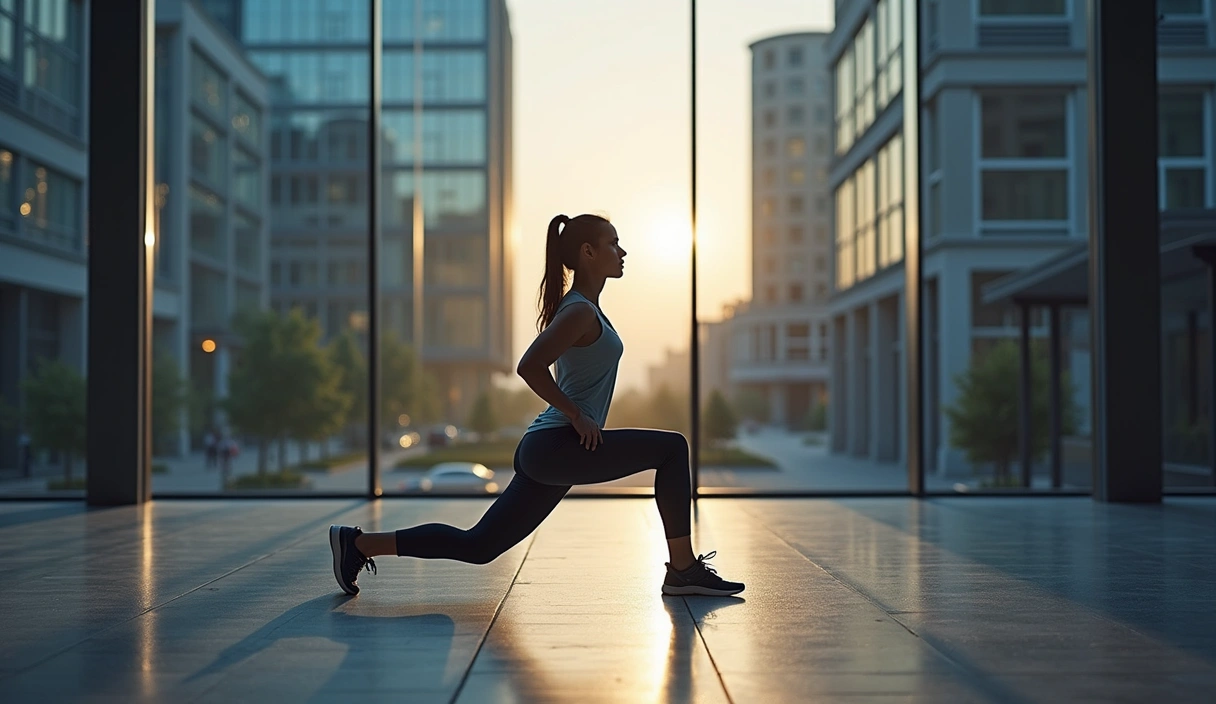
Reverse lunges work the glutes more than forward lunges while placing less stress on the knees, according to certified personal trainer BB Arrington. The exercise is a simple lower-body move suitable for beginners and can be performed with or without weights.
How to do reverse lunges
From a standing position, the exerciser may hold a weight in one hand. The left foot steps backward. With a hinge at the hips, both knees bend as the back knee lowers toward the ground. The position is held for three seconds before returning to the start. That counts as one repetition.
Tips and modifications
For those new to the move, the weight can be left out and hands placed on the hips. Arrington advises keeping the hips square to ensure the target muscles are engaged. The core should be pulled inward and upward throughout the movement. Breathing is coordinated by exhaling when stepping back and lowering the knee, and inhaling when returning to standing.
Benefits of reverse lunges
Compared with classic forward lunges, which mainly work the quadriceps, reverse lunges provide a greater stretch and challenge for the glutes. The quadriceps and hamstrings assist during the movement. The exercise places less strain on the knee joints, making it a good option for people with knee concerns. Adding weights and core engagement turns the move into a full-body exercise that also works the arms and abs. Because the exerciser steps back with one foot, balance is also tested. Arrington notes that the movement is likely to produce a burning sensation in the glutes and legs.
Arrington recommends including reverse lunges in leg day workouts or full-body routines. Despite the movement’s simplicity, it can help build strength over time.