

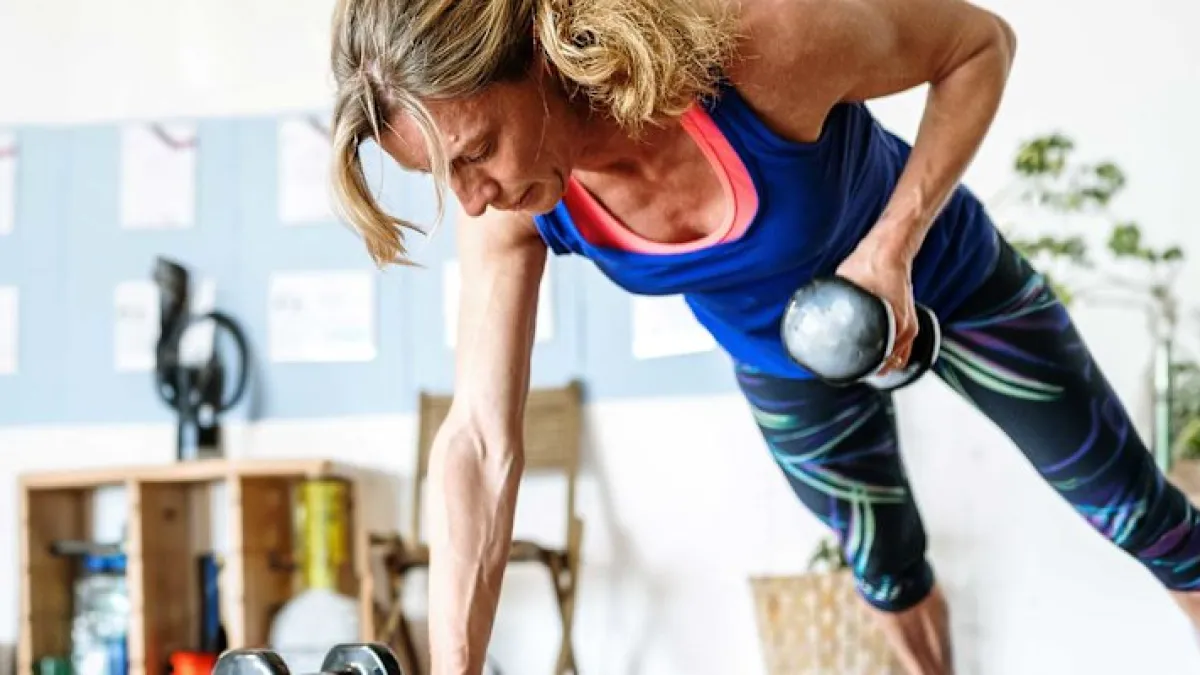
A new study indicates that lifting heavy weights is the most effective way for older adults to build and maintain muscle strength over the long term. The research focused on adults between the ages of 64 and 75, examining the long-term effects of different strength training methods.
Muscle mass naturally declines with age. People lose about 3 to 8 percent of their muscle each decade after age 30, with the rate of loss increasing after age 60. This process is driven by less efficient muscle protein synthesis, declining hormones that support muscle growth, and increased inflammation that can damage muscle cells.
The study, conducted in Denmark, involved 451 adults who were randomly assigned to one of three groups for a year of supervised training. One group performed heavy resistance training using machines three times a week. They completed nine exercises, doing three sets of 6 to 12 repetitions at 70 to 80 percent of their maximum strength.
A second group performed moderate-intensity circuit training using bodyweight and resistance band exercises three times a week. They did nine exercises that matched the machine exercises, completing three sets of 10 to 18 repetitions at 50 to 60 percent of their maximum strength. A control group maintained their usual activity levels. All participants were already active, averaging nearly 10,000 steps per day.
The results showed that both weight training groups improved muscle strength and function. However, the improvements were more pronounced in the heavy lifting group. Four years after the study ended, those in the heavy training group had maintained their total lean mass and strength. The moderate-intensity group showed a slight, but not significant, decline in strength. The control group experienced a clear decline in strength over the same period.
These findings suggest that maintaining an active routine with walking or bodyweight exercises alone is not enough to counter age-related muscle loss. Lifting heavy weights, defined as a weight that requires 70 to 80 percent of a person’s maximum effort, is key. What is considered heavy varies by individual. For one person, a 5-pound weight for a bicep curl may be enough, while another may need 15 pounds.
For those new to lifting, working with a personal trainer can help build confidence and create a tailored program. In addition to strength training, nutrition plays a role in muscle health. Adequate protein intake is needed to support muscle growth and recovery. A general goal is 1 gram of protein per pound of body weight per day. Some also use creatine supplements to enhance strength gains from exercise.
Preserving muscle mass is closely tied to long-term health and longevity. Strength training with heavy weights is presented as a primary method to prevent muscle loss and continue building muscle in older age.